
The Problem of Knowledge [Trenchant Edges]
Welcome back to the Trenchant Edges, a Newsletter about not knowing what kind of newsletter it is.
I’m your host, Stephen and this is yet another expression of the anatomy of failure where my conflicting desires for this project complicate it. Don’t worry, there’s a real essay after this preamble, just getting some housekeeping out of the way.
TLDR: The way I’ve run this newsletter for the last 6 or so years has been bad actually. What I want to do is long form investigations of complex topics but those take a long time to do and I feel pressure from myself to publish and try and grow this thing so I’m not losing money on it relative to doing other work.
I’ve got another thing I want to try let’s say until the end of May.
What I’m thinking is doing kind of a book report a week on something relevant I’m reading.

I usually have to read multiple books to do the longer form stuff anyway, so this lets me do work towards a bigger topic while also making something interesting regularly enough to really grow.
We just broke 1,500 readers and I’d really like to see that number grow quite a lot.
Does this make sense? I figure it’ll also really increase the variety of stuff we talk about here.
Let me know what you think. I literally require feedback.
OK, let’s get into the real shit.
What If What You Know is Wrong?
An underrated problem we have in the US that makes every other problem we have worse is how we teach people what knowledge is, how to get it, and how it works.
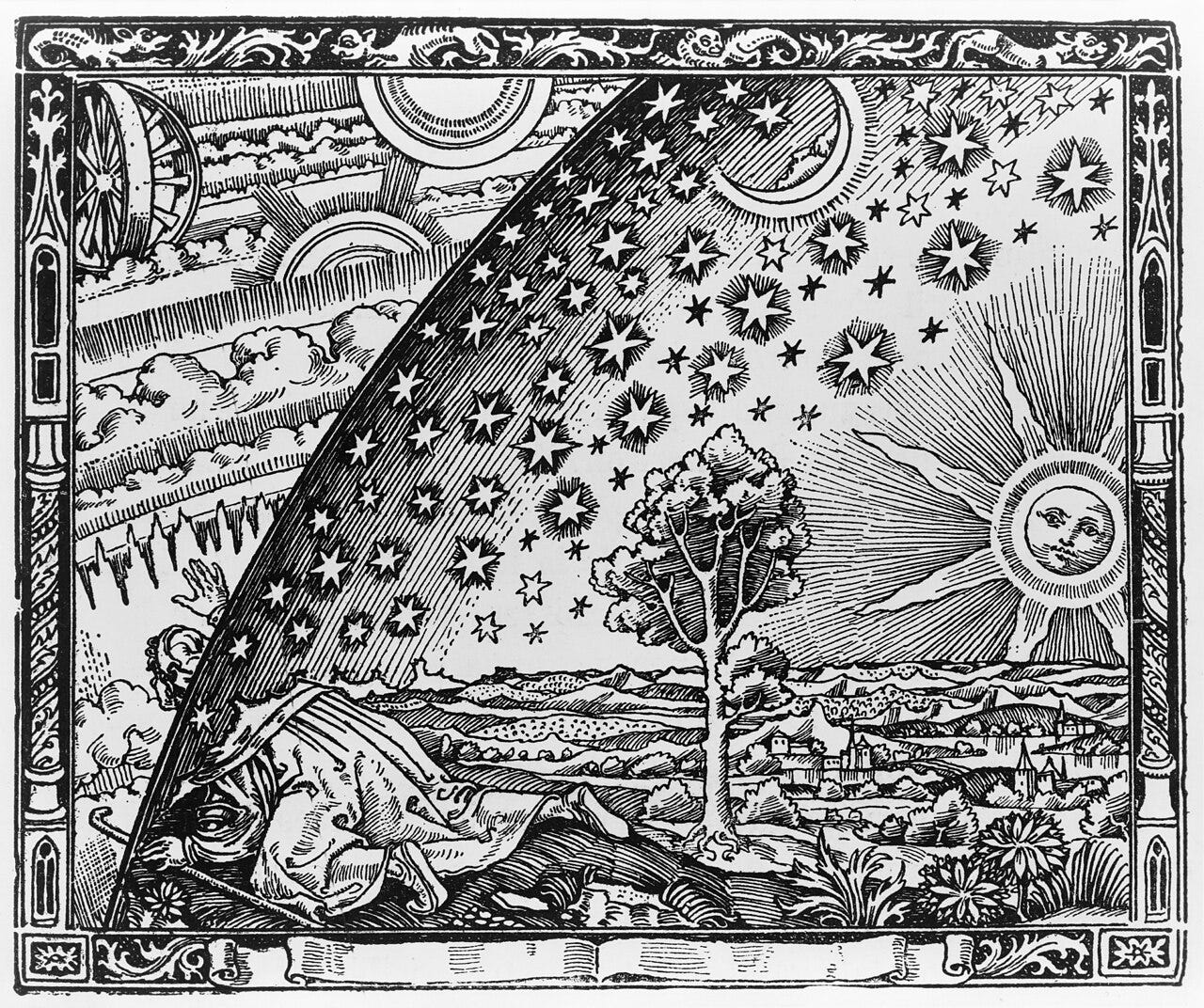
Basically, there are two major tracks and they teach the same thing.
Public Education teaches that knowledge is dispensed from approved authorities.
Religion teaches that knowledge is dispensed from approved authorities.
Who approved them? What is their authority? Don’t worry about it.
And while I obviously think this is a very bad way to teach people anything, it does have some advantages.
For starters and the most legitimate: People who do not know things are not super well equipped to know what they need to know. Especially when it takes 10-15 years for that knowledge to build up into something really useful.
But the biggest one is respect for the established ahem canon of knowledge which we’ve been passing down since before the beginning of history.
Since culture replaced biology as the most active engine of raw human experimentation we’ve seen this accelerate. We have surviving art in cave paintings that are almost 70,000 years old, the oldest sculpture is around 40,000 years old, language started to develop like 135,000 years ago. Homo Sapiens Sapiens is biologically about 200,000 years old. Gathering grain started about 100,000 years ago and really started to convert to agriculture about 12,000 years ago, creating the Neolithic Revolution.
And that’s all before anything resembling what we’d call “civilization.”
We’ve inherited the results of all of that and so much more for both good and ill. The whole nasty, glorious spectrum of human existence.
Much of that was extremely valuable.
Civilization also contributed what we’re going to euphemistically call lessons here. But the need for unity at scale has often tempted various kinds of empires into developing something that goes beyond Tradition and becomes a kind of rigid Orthodoxy.
But these Orthodoxies are inherently political, coercive, and lean towards delusional.
Why?
Because they reject the most basic facts of reality: Time moves on and all knowledge decays and becomes out of date.
That’s a physical fact. Unavoidable unless we’ve really fucked up understanding physics.
But Orthodoxies are far more mutable their their advertising (or opponents advertising) says. What we might call Ideological Entrepreneurship is widespread and commonplace for even the most extreme traditionalists.
We can use the far right’s War On Empathy as a case study. This is a very new idea in western circles, and while there’s a long history of preferring compassion to empathy and criticizing the latter in Buddhist circles, this is a different beast.
This is about policing the dehumanization of right wing outgroups in a settler colonialist/white supremacist nation: The Left is trying to trick you into caring about people you shouldn’t give a fuck about.
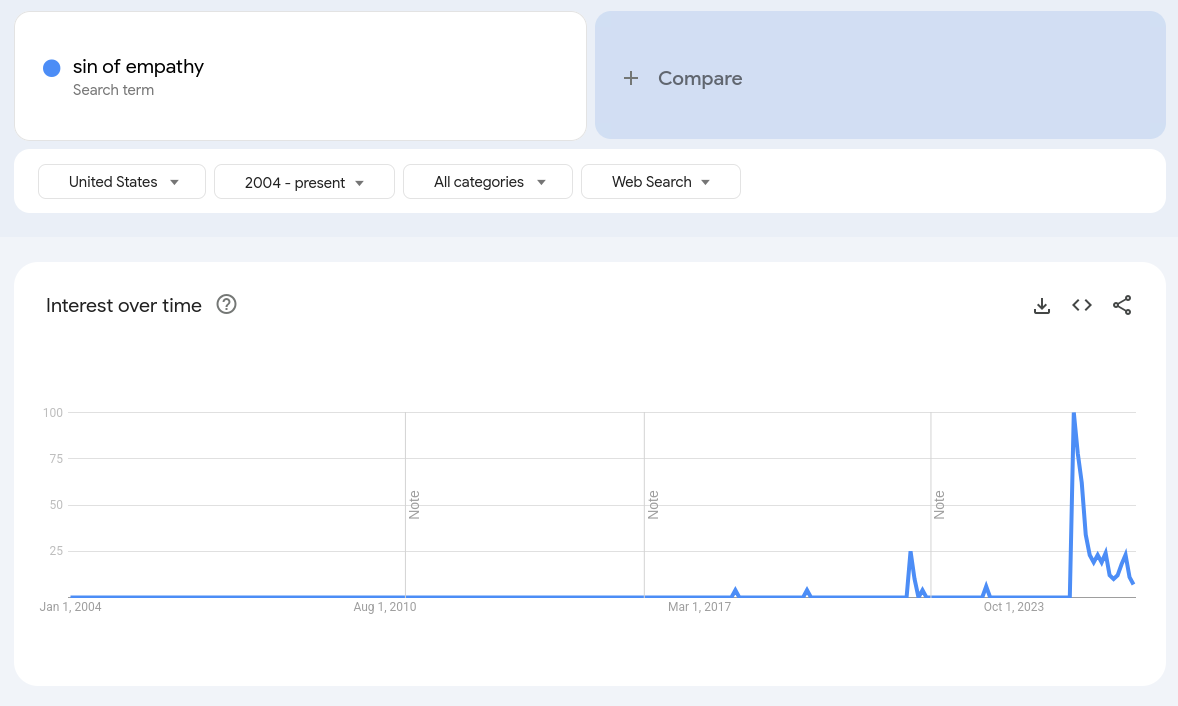
Basically, it’s a handful of thought leaders spreading a useful meme to shore up their ideological weaknesses.
If you want me to trace all that out… that’s a thing you can ask me to do:
Most classical Christian virtues are the polar opposite of this concept. And it’s most loudly preached by those who also support a literal interpretation of the bible. Go look up the Beatitudes from Jesus’ Sermon on the Mount and think about the “sin” of Empathy.
But there’s always been a gulf between Christian virtues on paper and what Christians actually value. Alas, not a vice exclusive to them.
We could go on at length over any institution you might like and discover no matter how loudly they talk about the Truth of this or that being unchanging, their actual lived practice is filled with innovation.
This is a known problem for your real fascist Traditionalists coming out of Julius Evola and other creeps. The perfect ancient Truth is always being perverted and “degenerates” are everywhere, even daring to count themselves among the “faithful”.
This is why they police themselves the way they do.
What does all this have to do with knowledge?
Because all of us are acculturated by those we grow up around. We inherit versions of their beliefs and ideas, both implicit and explicit. And then we react to those things. Some we accept, some we reject, some we don’t even notice building off.
This gives us a wide array of cultural behaviors we can participate in. What it doesn’t do is give us the full context for maybe any of them.
And to the extent to which we’re playing off these unnoticed ideals, we’re also unconscious of how we’ve been shaped and conditioned by interpersonal, cultural, and economic forces.
In the past, my suggestion about this has always been to do a Descartes and try to doubt everything you’ve been told. There are two problems with that.
Doubt itself isn’t enough.
It’s the slow, manual, fumbling of concepts until they dissolve.
Most people are kinda busy trying to survive and help those around them survive. That process took me, in fairly ideal conditions, a few years to do. Not great.
See, concepts are janky. They don’t map on to reality well, so we usually distort our perceptions over recognizing their flaws. Every idea is false in some sense.
So sufficient skepticism will eventually bring those to open awareness where they can be addressed. Usually not fixed, but at least mitigated, or hedged against, or changed in some way.
Sometimes it even works.
Knowledge is hard. Certainty is an illusion.
But at the same time hyper-skepticism is a lot of naval gazing, time wasting, and arguably dangerous to your mental health.
The answer to that is only a partial solution, because you end up doing the work of a lifetime either way, but it’s learning to understand the underlying structure of knowledge itself.
What you have to do is a messy bit of on-the-go triage because you don’t know what you don’t know about what you do know.
Wrapping Up
This piece has been weirdly hard to write as I’ve ended up distracted and rambling a ton while poking holes in my own ideas. There’s literally another 2000 words of this essay that just felt too messy to go with.
As for what’s next… we’ll keep that up in the air with the mysterious lights.
See you next time.
-S
But seriously, more than money I need feedback and a growing audience. If you liked this or know someone who’d enjoy it leave a comment and/or share it with them.
I think the book report idea is a great one. I'd love to know if antigravity is a real thing, wouldn't that be a surprise? As you've noticed, having really good ideas frequently and regularly is actually really hard. I have occasionally used book reviews and interviews with interesting people to fill my blogs, and I find even that too much to bother with most of the time anyway. Lately I can hardly goad myself into posting cat pics.
Great article!
"The answer to that is only a partial solution, because you end up doing the work of a lifetime either way, but it’s learning to understand the underlying structure of knowledge itself."
It would be interesting if you could elaborate more on this in the future